Fishing Mechanics
Understanding how fishing works in Hooked: Crestwater Bay is key to becoming a successful angler. This guide covers all the mechanics you'll encounter.
The Fishing Process
Every fishing attempt follows these stages:
1. Casting
How It Works:
- Tap and hold to build power
- Release to cast your line
- Longer holds = farther casts
- Different fish prefer different depths and distances
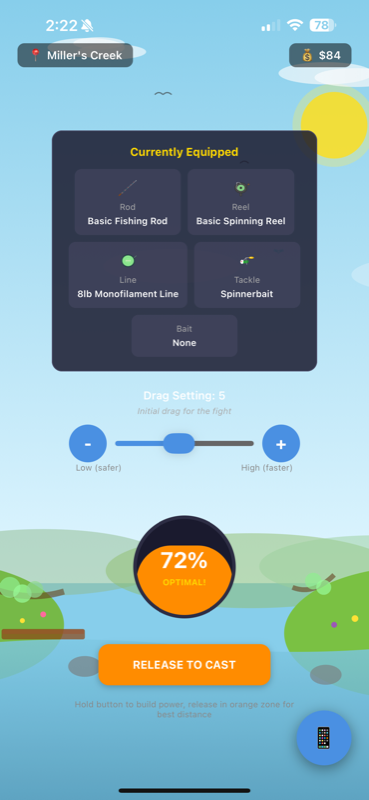 Screenshot: The casting power meter showing how to gauge cast strength
Tips:
- Watch the power meter to gauge your cast strength
- Some locations have specific "sweet spots" where fish congregate
- Experiment with cast distances to find where fish are biting
2. Waiting for a Bite
After casting, you'll wait for a fish to bite.
What Affects Bite Chance:
- Time of Day - Dawn (5-7 AM) and dusk (6-8 PM) have increased activity
- Weather - Overcast weather often improves bite rates
- Tackle & Bait - Matching the right combination to target species
- Location - Each spot has different fish populations
- Season - Fish behavior changes with seasons
Visual Indicators:
- Water ripples show fish activity
- Your bobber (if using float tackle) will dip
- The line tension indicator shows when something's interested
3. Hooking the Fish
When a fish bites, you need to set the hook at the right moment.
 Screenshot: The "HOOK!" prompt appearing when a fish bites
Hook Setting:
- Watch for the "HOOK!" prompt
- Tap quickly when it appears
- Too early = fish escapes
- Too late = fish spits the hook
- Different fish have different hook windows
Fish Behavior:
- Aggressive species (Pike, Bass) - Quick, hard strikes with narrow hook windows
- Cautious species (Trout, Whitefish) - Gentle nibbles, wider hook windows
- Bottom feeders (Sucker) - Slow, deliberate bites
4. Fighting the Fish
Once hooked, you must carefully fight the fish to land it.
Line Tension System: The key to landing fish is managing line tension:
- Green Zone - Safe tension, reel in steadily
- Yellow Zone - Moderate tension, slow down reeling
- Red Zone - Critical tension, STOP reeling or risk breaking the line
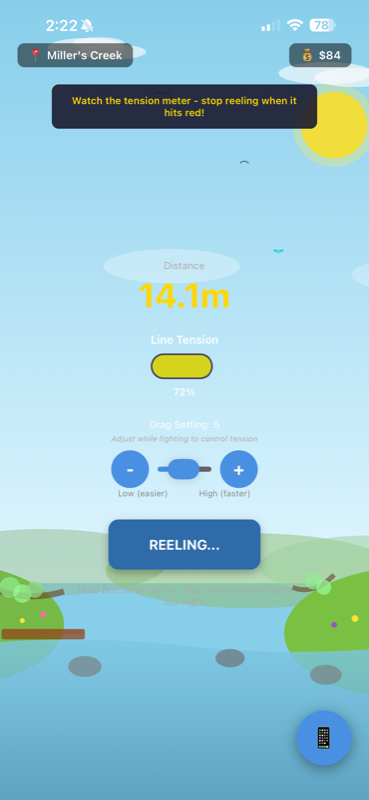 Screenshot: The line tension meter showing green, yellow, and red zones during a fight
Fighting Mechanics:
- Reel when safe - Tap rapidly to reel in when tension is green
- Let fish run - Stop reeling when tension hits yellow/red
- Manage stamina - Fish tire over time, making them easier to reel
- Watch for surges - Fish will suddenly pull hard; be ready to stop reeling
Species-Specific Behaviors:
| Fish Type | Fighting Style | Strategy |
|---|---|---|
| Northern Pike | Powerful initial runs, then tires quickly | Let it run hard at first, then apply pressure |
| Lake Trout | Steady, deep pulls with endurance | Patient, consistent reeling |
| Walleye | Quick direction changes | Stay alert, adjust reeling constantly |
| Brook Trout | Jumps and aerial acrobatics | Maintain steady pressure, don't panic |
| Smallmouth Bass | Aggressive head shakes | Short, controlled reel bursts |
5. Landing the Catch
Successfully bring the fish to shore to complete the catch!
Landing Tips:
- Keep tension in the green zone in the final moments
- Fish are most dangerous when close (final surge)
- Large fish require patience in the final phase
- Your equipment quality affects landing success rate
Equipment & Its Effects
Rods
- Basic Rod - Standard performance
- Sick Nasty Stick - Premium rod with better control and higher line strength
Reels
- Affects how quickly you can reel in fish
- Better reels provide smoother tension management
Line
- Line Strength - Determines how much tension before breaking
- Basic Line - 8 lb test, good for small-medium fish
- Improved Line - 12 lb test, handles larger species
Tackle
Different tackle types suit different fishing styles:
- Hooks - Universal, work with bait
- Crankbaits - Dive to specific depths, attract aggressive fish
- Spinnerbaits - Flash and vibration, great for Pike and Bass
- Jigs - Bottom fishing, perfect for Walleye
- Poppers - Surface lures for dawn/dusk fishing
Bait
Live bait improves your chances:
- Nightcrawlers - Universal, effective for most species
- Minnows - Attracts predatory fish like Pike and Bass
- Crayfish - Bottom feeders and Smallmouth Bass love these
- Soft Plastic Worms - Reusable alternative to live bait
Advanced Techniques
Reading the Water
- Look for surface activity (ripples, jumps)
- Fish near structures (docks, rocks, vegetation)
- Adjust depth based on temperature and time of day
Seasonal Patterns
- Spring - Fish are shallow and actively feeding
- Summer - Fish move deeper during heat
- Fall - Aggressive feeding before winter
- Winter - Slow, lethargic fish requiring patience
Weather Effects
- Sunny - Fish move deeper, seek shade
- Overcast - Fish are more active, feeding increases
- Rain - Surface activity increases
- Before Storms - Peak feeding activity (barometric pressure drop)
Time of Day
- Dawn (5-7 AM) - Peak feeding time, use topwater lures
- Midday - Slower action, focus on deeper areas
- Dusk (6-8 PM) - Second peak feeding time
- Night - Specific species become active (Walleye, Lake Trout)
Common Mistakes
- Reeling too aggressively - Causes line breaks
- Ignoring weather/time - Fish behavior changes dramatically
- Using wrong tackle - Match tackle to target species
- Poor hook timing - Practice makes perfect
- Not upgrading equipment - Better gear = easier fights
Practice Makes Perfect
The best way to improve is to:
- Complete Captain E's tutorial quests
- Experiment with different tackle/bait combinations
- Pay attention to what works in different conditions
- Keep detailed notes in your journal
- Don't be afraid to try new techniques
Remember: Fishing is about patience, observation, and adapting to conditions. Happy fishing!